


The Chicago Blues legend who inspired The Rolling Stones, Led Zeppelin, Sun Records’ Sam Phillips, and the rest of the world
Chester Arthur Burnett “Howlin’ Wolf”
(June 10, 1910 – January 10, 1976)

Chester Arthur Burnett, better known as Howlin’ Wolf, spent much of his early life like many Delta residents, working the fields and playing music whenever he could.
He was born in White Station, Mississippi, and raised around the Delta, which is the upper western area of the state. He picked up the nickname “Howlin’ Wolf” early; accounts differ on its exact origin, but the name sure stuck.
Wolf learned guitar directly from blues originators Charley Patton and Willie Brown. Patton’s commanding stage presence, with dancing, dramatic vocals and showmanship, left a lasting mark on Wolf’s own style.
“We tried to be the sons of Howlin’ Wolf, but we ended up being the sons of… well, we ended up being Led Zeppelin.”
– Jimmy Page
He also learned harmonica from the great Sonny Boy Williamson II (Rice Miller), who mentored him in the Delta.
By the late 1940s, Wolf led a tight band and worked steadily across Arkansas, Tennessee, and Mississippi. Early associates included Junior Parker and, soon after, the young Hubert Sumlin, who became Wolf’s defining guitarist.
Players came and went, but Sumlin’s partnership with Wolf proved foundational.
In 1951 Ike Turner was working as a talent scout in the Memphis scene, and brought Wolf to Sam Phillips’ Memphis Recording Service. Wolf cut “Moanin’ at Midnight” and “How Many More Years.”
Phillips didn’t have a record label yet, and so he leased masters to Chess Records (and at times to RPM/Modern), leading to charting releases and some label tug-of-war.
As the records became hits, Wolf relocated to Chicago, where Chess became his long-term home.
Sam Philips often discussed regret at not having a record label so he could sign Howlin’ Wolf himself, and the experience prompted him to create Sun Records in 1954. It wouldn’t be long before he found a young white boy who wanted to play and sing like his blues men heroes named Elvis Presley.
Despite this, Sam Phillips always called Howlin’ Wolf his greatest discovery.
In Chicago Wolf emerged as a pillar of the electric blues alongside Muddy Waters, sometimes as friendly rivals vying for songs, session players, and hits.
Willie Dixon wrote several of Wolf’s classics, including “Spoonful,” “Back Door Man,” “Little Red Rooster,” and “I Ain’t Superstitious.”
Wolf himself also authored enduring staples such as “Smokestack Lightnin’” and “Killing Floor.”
Onstage, Wolf was a force! At well over six feet tall and powerfully built, his demeanor was intimidating as he prowled, howled and worked the crowd with raw energy. He toured and recorded relentlessly through the 1950s and 1960s, even as his health declined after a serious car accident in the early 1970s.
Howlin’ Wolf’s music became a driving inspiration for the blossoming rock n roll scene. When The Rolling Stones emerged as the biggest band on the planet in 1965, for their first coveted U.S. TV appearance, they insisted on having Wolf open for them.
“He was a very kind man, but he was also a very frightening-looking man… When he started singing, he was just completely overwhelming.”
– The Rolling Stones’ Mick Jagger
Led Zeppelin was heavily influenced by Wolf. Several of their biggest songs were re-workings of Wolf’s tunes. “The Lemon Song”, (for which they ultimately gave Wolf songwriting credit), “How Many More Times” (a rework of “How Many More Years”), and “Whole Lotta Love” were all direct decedents of Howlin’ Wolf’s music.
In his final show, he reportedly died and had to be resuscitated backstage. Howlin’ Wolf died in 1976 from complications related to kidney and heart issues.
Recognition followed swiftly. He was inducted into the Blues Hall of Fame in 1980 and the Rock & Roll Hall of Fame in 1991. Today, Howlin’ Wolf stands as one of the essential architects of Chicago electric blues—an artist whose sound shaped rock, R&B, and blues for generations.
Also find Howlin’ Wolf Trivia HERE!
We’re honored at Bluescentric to dream up and produce official Howlin’ Wolf t-shirts and merchandise on behalf of Wolf’s family, and love spreading the good word about the great Wolf. If you like band t-shirts, the button below will take you to Howlin’ Wolf’s official store.
Browse the collection. Wear the legacy.
-
 Hot
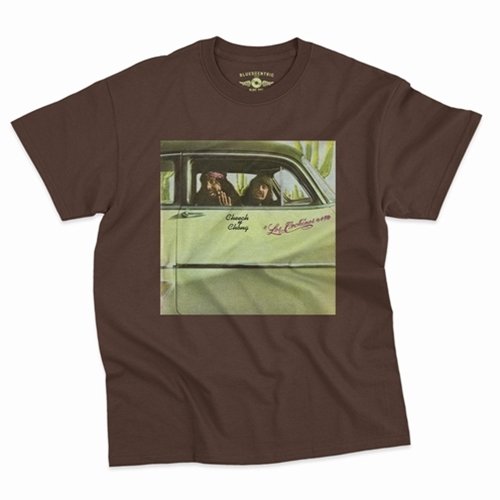
HotCheech and Chong Los Cochinos T-Shirt – Classic Heavy Cotton
Price range: $34.97 through $39.97 This product has multiple variants. The options may be chosen on the product page -
 Hot
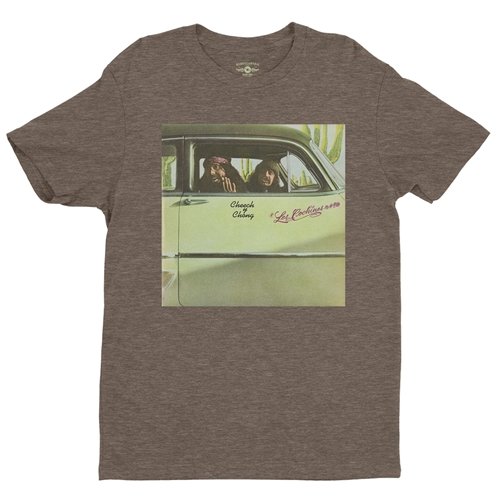
HotCheech and Chong Los Cochinos T-Shirt – Lightweight Vintage Style
Price range: $34.97 through $38.97 This product has multiple variants. The options may be chosen on the product page -
 Hot
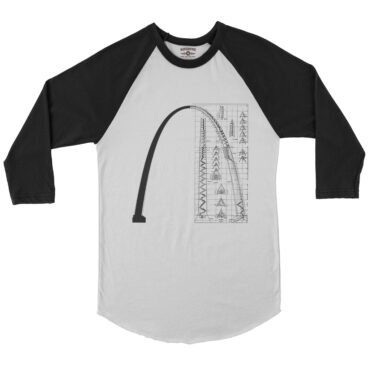
HotSaint Louis Arch Architecture Baseball T-Shirt
Price range: $37.97 through $39.97 This product has multiple variants. The options may be chosen on the product page -
Hot
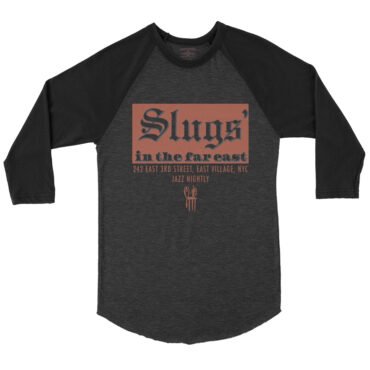
Slugs in the East Side Baseball T-Shirt
Price range: $37.97 through $39.97 This product has multiple variants. The options may be chosen on the product page