


McKinley Morganfield (Apr 4, 1915 – Apr 30, 1983)
Few people could say they were the Blues like Muddy Waters. A towering presence, his larger-than-life sound shaped generations of musicians.
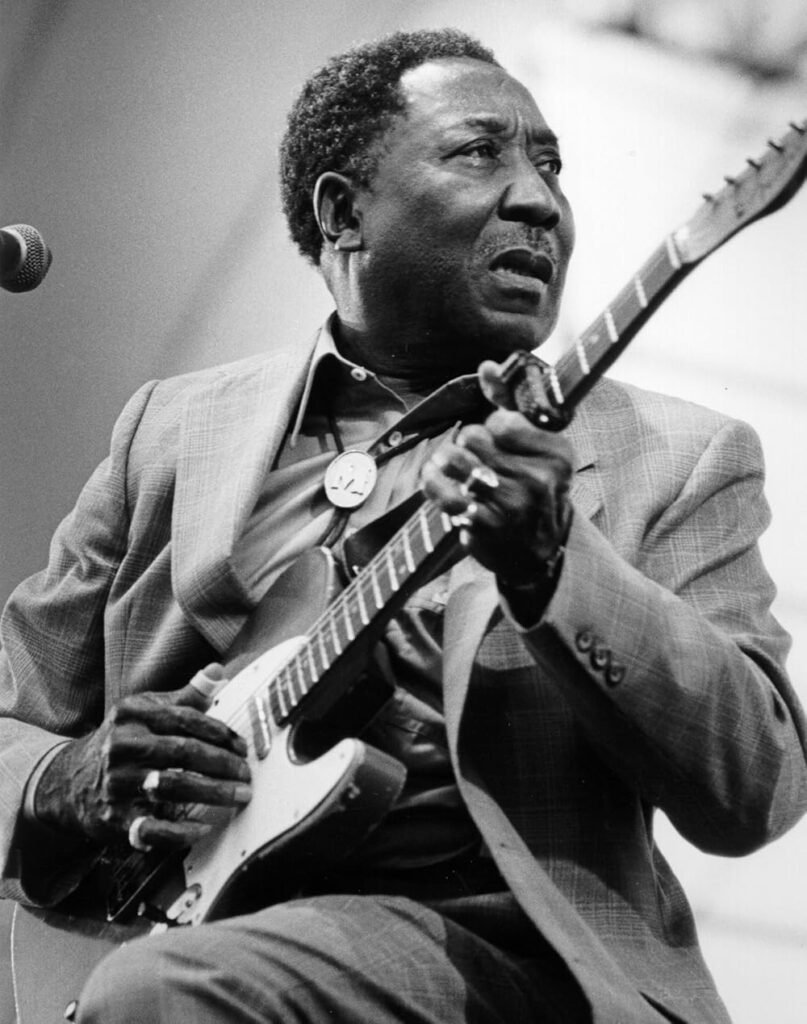
The nuance in his guitar work and his deep, rough voice made Muddy an inimitable force that drove Chicago blues—and then rock ’n’ roll—to new heights.
McKinley Morganfield, Muddy’s birth name, was born to a Mississippi sharecropper—sources differ between Rolling Fork (Sharkey County) and nearby Jug’s Corner (Issaquena County). After his mother died, he moved near Clarksdale to Stovall’s Plantation and picked up the nickname “Muddy” for childhood mud play.
Like many from the Delta, he sharecropped, learning call-and-response singing in the fields.
Strongly influenced by Son House, Muddy began guitar at 17, quickly mastering Delta slide—skills that later defined his electric sound. He played parties and juke joints with pianist Sunnyland Slim, who soon helped open doors.
In 1941, folklorist Alan Lomax recorded Muddy at Stovall for the Library of Congress; Lomax returned in 1942. Hearing those discs convinced Muddy to pursue music. In 1943 he boarded a train for Chicago.
Muddy’s move is often seen as the symbolic birth of Chicago’s electric blues. He played with greats like Sonny Boy Williamson (I) and Big Bill Broonzy. In 1944 he picked up his first electric guitar, channeling Delta roots through a fierce new sound.
In 1947 he cut sides for Aristocrat (soon to become Chess Records). Leonard Chess released “I Can’t Be Satisfied,” backed with “I Feel Like Going Home”; the single reportedly sold out within a day and set Muddy as Chess’s beating heart.
By the early 1950s, Muddy’s band—Little Walter (harmonica), Otis Spann (piano), and Jimmy Rogers (guitar)—and Chess were ascendant. Willie Dixon, hired at Chess, became a cornerstone songwriter and bassist.
Howlin’ Wolf soon joined the label, and the roster exploded. Across the ’50s–’60s, Muddy’s band cut staples like “Mannish Boy,” “Hoochie Coochie Man,” “I Just Want to Make Love to You,” and “She’s Nineteen Years Old,” many by Dixon or Waters. Members rotated—Spann and Little Walter left for successful solo runs—but the band launched careers.
In 1958 Muddy toured England with Spann, helping ignite a British blues wave that would fuel Eric Clapton, Rory Gallagher, the Yardbirds, Led Zeppelin, and the Rolling Stones—who took their name from his “Rollin’ Stone” and recorded at Chess in 1964. His 1960 Newport Folk Festival set yielded a landmark live album and boosted electric blues amid the folk revival.
The folk boom also complicated his path. Pressed by trends, some mid-’60s albums landed cold. Chess faltered and sold to GRT in 1969; Leonard Chess died that year.
A resurgence came in 1977 when Johnny Winter signed Muddy to Blue Sky. Hard Again (1977) won a Grammy, followed by the also-lauded I’m Ready (1978). He toured widely with Winter as audiences shifted. Muddy entered the inaugural Blues Hall of Fame class in 1980 and died in his sleep on April 30, 1983.
Muddy Waters remains one of the most celebrated bluesmen. He won six Grammys, entered the Rock & Roll Hall of Fame in 1987, and received a Grammy Lifetime Achievement Award in 1992. His legacy continues through his son, Big Bill Morganfield, who’s built a strong career of his own, including Born Lover (2009). Muddy changed the face of music—and did it with style.
Browse the collection. Wear the legacy.
-
 Hot
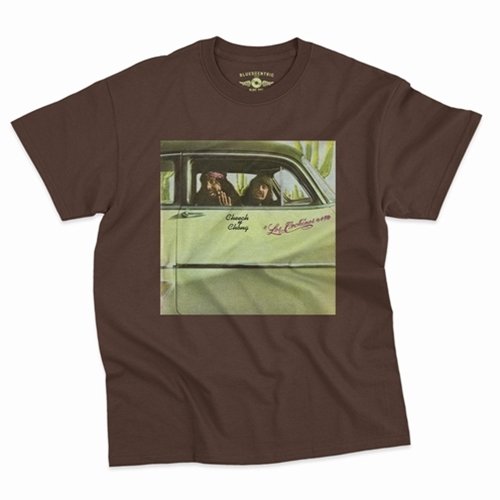
HotCheech and Chong Los Cochinos T-Shirt – Classic Heavy Cotton
Price range: $34.97 through $39.97 This product has multiple variants. The options may be chosen on the product page -
 Hot
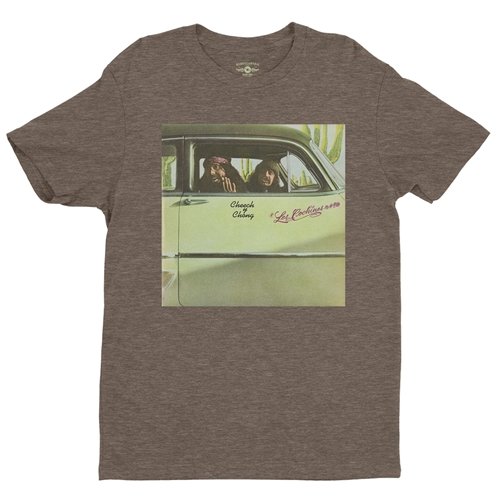
HotCheech and Chong Los Cochinos T-Shirt – Lightweight Vintage Style
Price range: $34.97 through $38.97 This product has multiple variants. The options may be chosen on the product page -
 Hot
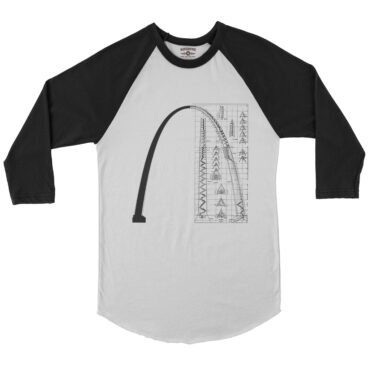
HotSaint Louis Arch Architecture Baseball T-Shirt
Price range: $37.97 through $39.97 This product has multiple variants. The options may be chosen on the product page -
Hot
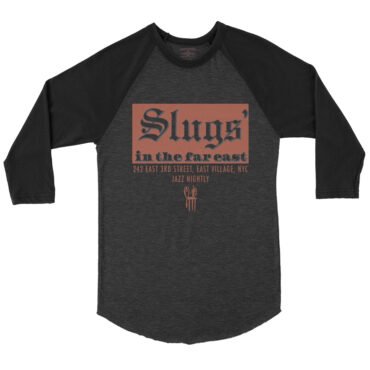
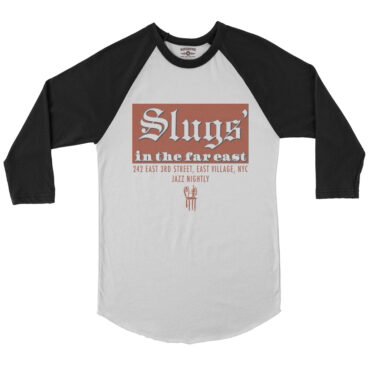
Slugs in the East Side Baseball T-Shirt
Price range: $37.97 through $39.97 This product has multiple variants. The options may be chosen on the product page