


And that Cymbal that was thrown at him
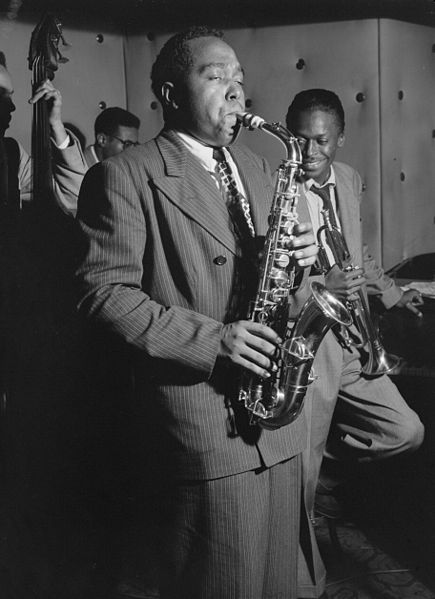
Before he was a legend, Charlie Parker was just another teenager trying to make himself heard in Kansas City’s smoky jam sessions. Kansas City in the 1930s was in many ways a prototypical Las Vegas, 24/7 clubs, gambling and swing bands with a rhythm that never seemed to sleep.
It was there, in the middle of that scene, that Parker became “Bird.” The exact story depends on who’s telling it…
There was one famous story from the road, when the band’s car hit a chicken, and Parker, nicknamed insisted they stop to pick it up. That night they cooked it for dinner, and from then on, everyone called him “Yardbird.” Eventually, it just became “Bird.”
Others say the nickname came from childhood, because he loved eating chicken (“yardbird” being slang for chicken back then). Either way, the nickname stuck, and so did the myth.
But Parker’s Kansas City story wasn’t all nicknames and charm. There’s also that famous cymbal story… It’s a tale most every jazz fan knows some version of.
Around 1937, Parker was still a teenager and bold enough to bring his saxophone to Kansas City’s Reno Club to jump on stage with some of the city’s best musicians. Among them was drummer Jo Jones (no relation to Philly Jo Jones), who had already made a name for himself in Count Basie’s band.
Parker started playing, but things fell apart. He lost the beat, stumbled over the chords, and Jones (depending on who you believe) tossed a cymbal to the floor near Parker’s feet. The crash echoed through the club. Whether it was meant as humiliation or a lesson, Parker took it personally. He packed up, walked off stage, and swore he’d come back ready.
And he did.
In Charlie Parker lore, that moment lit a fire in him. Parker practiced obsessively, learning every chord change, every scale, pushing his technique until he could play things no one had heard before. He was said to have haunted KC’s parks & back alleys, playing for hours. The “Bird” that came back wasn’t the same kid who’d been laughed off stage. Within a few years, Charlie Parker was re-defining jazz itself.
The “BIRD” nickname became part of that transformation. “Bird” showed up everywhere: in song titles like Yardbird Suite and Ornithology, in club posters, and eventually, in how the entire jazz world referred to him. It wasn’t just a name anymore; it was an idea — something that could soar.
After Parker passed away, his friend poet Ted Joans spearheaded a movement to crawl “Bird Lives” across New York City and beyond. Today, you can still find the occasional “Bird Lives” written in NY’s concrete sidewalks.
Kansas City still claims that Parker story as its own. You can walk past the spot where the Reno Club once stood and imagine that crash of cymbal and the young man who decided, right there, that he wasn’t finished. For a musician like Charlie Parker, that moment of failure wasn’t the end… it was the beginning.
Browse the collection. Wear the legacy.
-
 Hot
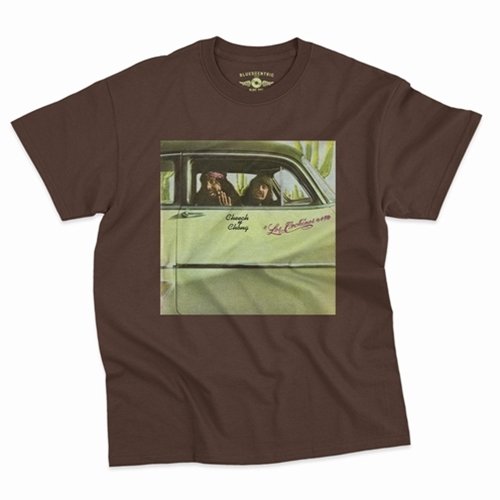
HotCheech and Chong Los Cochinos T-Shirt – Classic Heavy Cotton
Price range: $34.97 through $39.97 This product has multiple variants. The options may be chosen on the product page -
 Hot
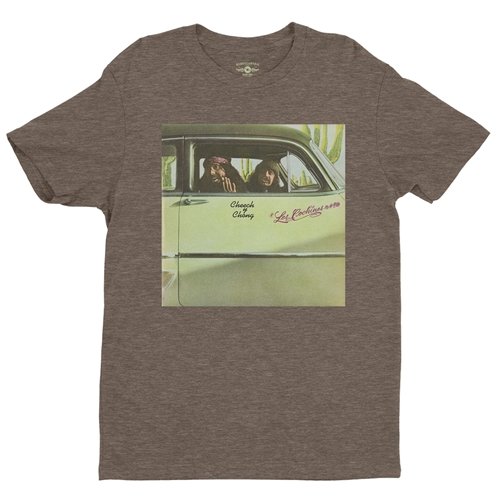
HotCheech and Chong Los Cochinos T-Shirt – Lightweight Vintage Style
Price range: $34.97 through $38.97 This product has multiple variants. The options may be chosen on the product page -
 Hot
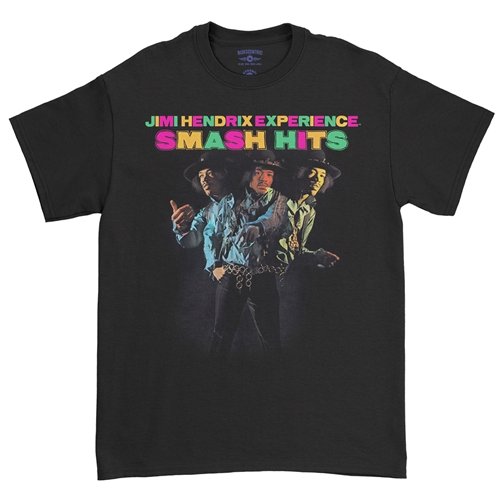
HotJimi Hendrix SMASH HITS Album Cover T-Shirt – Classic Heavy Cotton
Price range: $34.97 through $39.97 This product has multiple variants. The options may be chosen on the product page -
 Hot
HotSaint Louis Arch Architecture Baseball T-Shirt
Price range: $37.97 through $39.97 This product has multiple variants. The options may be chosen on the product page