


The music known today as “the blues” was boiling up in hotspots all over the United States by the 1920s, each with its own distinctive flair. While Delta Blues is often credited as the focal point, flavors of blues music were being developed & recorded in places like Kansas City, New Orleans, and along hundreds of clubs and venues on the chitlin Circuit.
This article gives you a brief overview of most major styles of blues music, and links to articles that explore some styles in more depth.
Delta Blues
Delta Blues comes from a region in Northwestern Mississippi known as “the delta”, a two hundred mile area of remarkably flat terrain stretching from Memphis to Vicksburg.
The music was made by poor black sharecroppers & former slaves, usually just guitar and vocals. It is arguably the most famous subgenre of blues, partially because it was largely responsible for the explosion of Rock n Roll.
The sheer number of celebrated artists who came from the Delta area is noteworthy. Muddy Waters, John Lee Hooker, Elvis Presley, Howlin Wolf, Sam Cooke, Ike Turner, among many others.
Chicago Blues
Symbolically, the Chicago Blues sound started when Muddy Waters stepped off of the train from the Clarksdale, Mississippi into Chicago, Illinois. He was a part of the great migration, where countless thousands of poor, mostly black residents of the south escaped brutal, caste-like systems, oppression, and racism to seek industrial jobs, more equality and a better way of life in the north.
Texas Blues
Like the state it’s named for, Texas Blues casts a larger than life net that includes unique finger picking and super high-energy guitar, influences from country music, cajun and zydeco.
Texas Blues first gained notoriety in the 1920s with the popularity of Blind Lemon Jefferson. Texas Blues started with a swing feel and, much like the Delta style, unaccompanied guitar playing. The “Texarkana” area of Arkansas, Texas and Louisiana had a rich history of cajun influence that bleeds into western swing. Artists like Lightning Hopkins and T-Bone Walker spread the gospel of Texas Blues across the world.
While Texas Blues casts a wide net of influences, it’s probably best known for the intense, hard driving electric guitar from the likes of ZZ Top and Stevie Ray Vaughan, whose lightning-quick machine gun style took the world by storm before his tragic passing.
Blues-Rock
Blues rock fuses traditional blues structures with the volume, drive, and improvisation of rock. Artists like Jimi Hendrix helped forge the long-popular style, by expanding blues expression through distortion, feedback, and electric power.
Blues rock was shaped by artists who carried that hard punching style into the late ’60s, ’70s, and far beyond, blending blues roots with hard rock, boogie, and modern electric tones. Eric Clapton, Jimmy Page, Stevie Ray Vaughan, Duane Allman, Johnny Winter, and later torchbearers like Joe Bonamassa and Gary Clark Jr. have all contributed to the style and evolution of Blues Rock!
Kansas City Blues
Kansas City in the early 20th century was a roaring center of night life, and with it came 24 hour jazz jams and big band entertainment. Plentiful work for musicians made an atmosphere where Jazz found its legs with Charlie Parker, and big band influenced a sophisticated “jump blues” style a la Big Joe Turner, Brownie McGhee and Lester Young.
Saint Louis Blues
While St Louis Blues and Kansas City Blues come from opposite sides of the State of Missouri, both have their own unique styles. St. Louis blues reflects the city’s role as a Mississippi River crossroads, blending blues with ragtime and early jazz influences into a more structured, urbane sound. Stl Blues was popularized by figures like W. C. Handy and even the father of Rock n Roll, Chuck Berry.
Piedmont Blues
Piedmont blues is a fingerpicked guitar style that developed in the Piedmont region of the southeastern United States. Known for its rolling, syncopated rhythms that echo ragtime and early jazz, the style often features alternating bass lines with melodic treble runs. Piedmont Blues has a lively, dance-like feel that’s distinct from the heavier Delta blues sound.
Hill Country Blues
This style of blues originated in the Mississippi “hill country”, a hilly area in Centra Mississippi below Memphis. Artists like R.L Burnside, Junior Kimbrough and Othar Turner pioneered a largely one-chord droning style. While that sounds like it could get repetitive, it provides the perfect canvas to let solo work and vocals shine.
Thanks to the efforts of labels like Fat Possum Records, R.L.’s unique style became a worldwide sensation. Contemporary artists like the North Mississippi Allstars and the Rising Sun Fife & Drum Band carry on hill country traditions.
Bentonia Blues
This specialized style of blues originated in a small town in Mississippi called Bentonia. The godfather of the haunting finger-picked minor-key style was Skip James. The tradition is carried on at the faed juke joint Blue Front Cafe, with artists like Jimmy “Duck” Holmes.
Classic Blues
Classic blues emerged in the 1920s as a woman-lead powerful vocal tradition. In many ways, it produced the earliest pop stars, artists like Bessie Smith, Ma Rainey, and Billie Holliday whose commanding voices brought blues to national audiences through records and vaudeville stages. It was often backed by small jazz ensembles, and leaned into emotional storytelling & a polished urban sound that helped define early popular American music.
Soul-Blues
While Soul Music and Blues are hopelessly intertwined, a special sub-genre of the blues emerged called Soul blues, which blends traditional blues feeling with gospel, R&B, and soul influences. Spearheaded by artists like Bobby Blue Bland, Soul Blues emphasizes rich vocals, smooth horn arrangements, and deeply personal emotion.
Country Blues
The Country Blues is a style of blues that is largely centered around the acoustic guitar and a folk sound. It encircles a whole range of different blues styles. For example, Delta Blues Master Charley Patton played a distinctly delta style, but his sound was also Country Blues. It could be said that Country Blues could be heard in the Texas Blues style of Blind Lemon Jefferson, as well as in Piedmont Blues style 1500 miles away. The Folk Songster Mississippi John Hurt, nestled in Avalon, Mississippi could also have been categorized within the Country Blues genre. It was Country Blues musicians that migrated from rural areas who began the Blues’ energetic evolution in Chicago to the now-famous electric style.
Browse the collection. Wear the legacy.
-
Hot
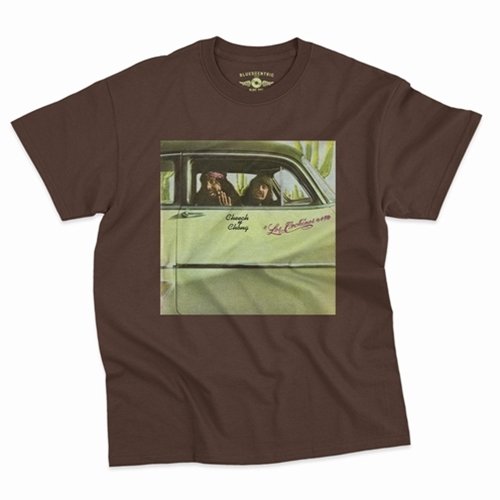

Cheech and Chong Los Cochinos T-Shirt – Classic Heavy Cotton
$34.97 – $39.97Price range: $34.97 through $39.97 Select options This product has multiple variants. The options may be chosen on the product pageSelect options This product has multiple variants. The options may be chosen on the product page Quick View Add to wishlist -
Hot
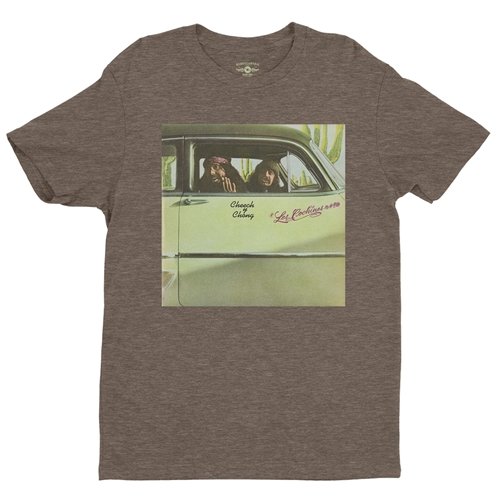

Cheech and Chong Los Cochinos T-Shirt – Lightweight Vintage Style
$34.97 – $38.97Price range: $34.97 through $38.97 Select options This product has multiple variants. The options may be chosen on the product pageSelect options This product has multiple variants. The options may be chosen on the product page Quick View Add to wishlist -
Hot
Slugs in the East Side Baseball T-Shirt
$37.97 – $39.97Price range: $37.97 through $39.97 Select options This product has multiple variants. The options may be chosen on the product pageSelect options This product has multiple variants. The options may be chosen on the product page Quick View Add to wishlist -
Hot
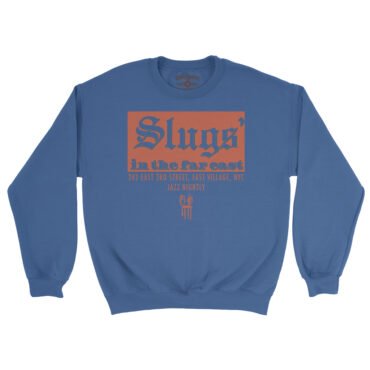
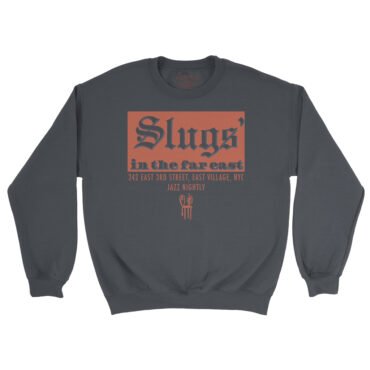
Slugs in the East Side Crewneck Sweatshirt
$56.97 – $58.97Price range: $56.97 through $58.97 Select options This product has multiple variants. The options may be chosen on the product pageSelect options This product has multiple variants. The options may be chosen on the product page Quick View Add to wishlist