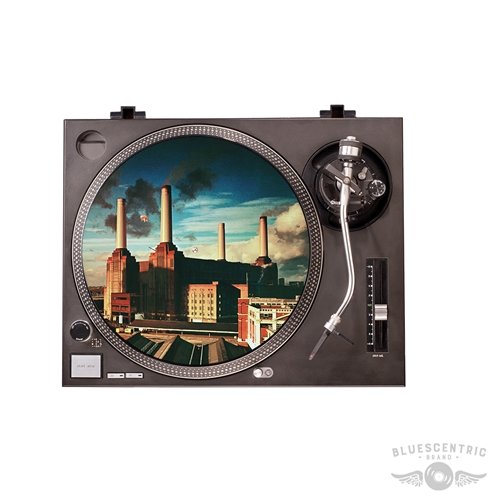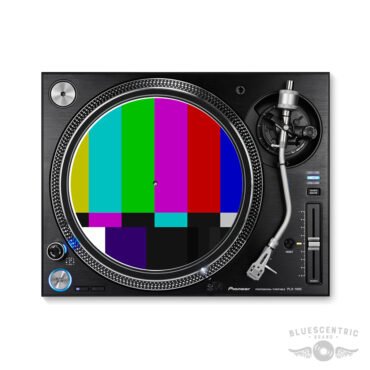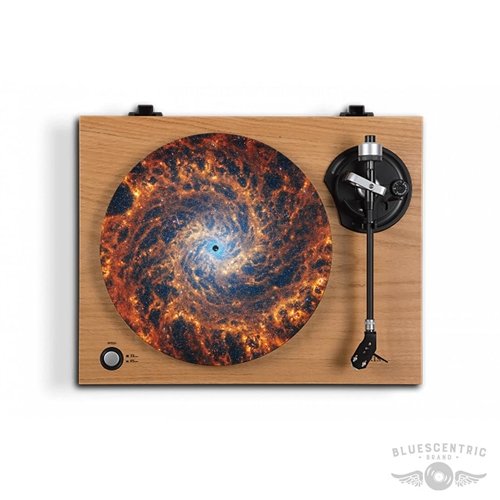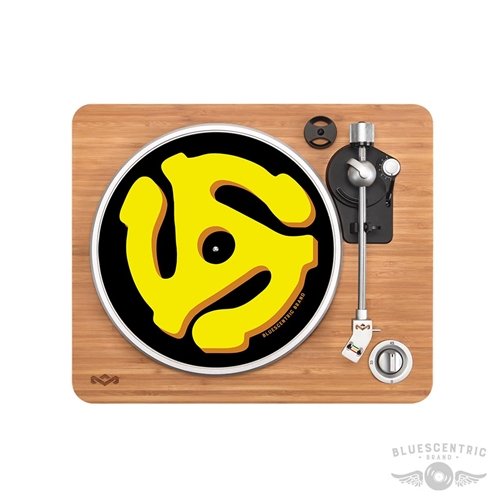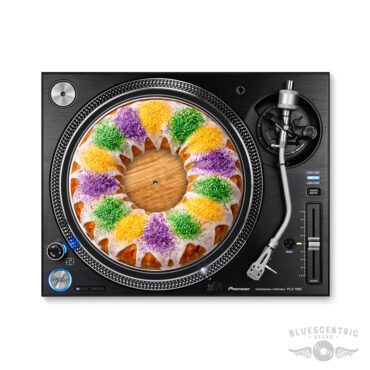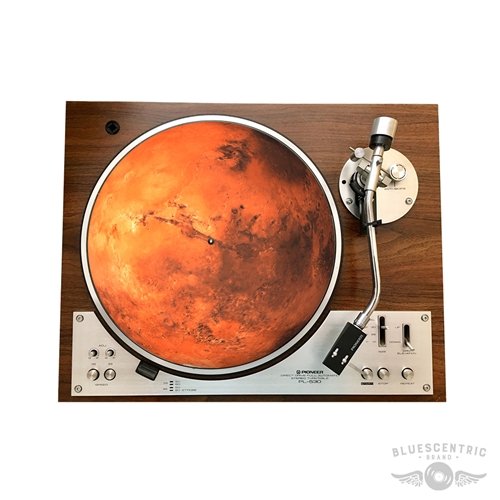



A turntable slipmat (sometimes called a PLATTER MAT) is a thin mat placed between your turntable platter and your record. This turntable or record player mat reduces friction, protects your vinyl, and improves playback performance. DJs use slipmats for scratching and cueing, while audiophiles use them to reduce vibration and improve sound clarity.
At Bluescentric, our day job is manufacturing officially licensed and graphic turntable slipmats for record players. We get a lot of questions about platter mats, so we made this handy turntable slipmat guide!
What does a Vinyl Slipmat Do?
- Reduces friction
- Protects records
- Enables DJ scratching
- Improves sound isolation
A turntable slipmat’s primary job is to protect records, improve playback performance, and enhance the overall turntable experience.
At the most basic level, a slipmat creates a buffer between the hard platter and your record. This helps reduce friction, prevent scratches, and minimize static buildup.
Many turntables ship with a basic mat, but upgrading to a higher-quality or purpose-specific slipmat can make a noticeable difference.
Slipmats are especially popular with DJs and collectors. DJs rely on slipmats to allow records to start, stop, or cue smoothly without damaging the vinyl. Audiophiles and home listeners often choose slipmats for vibration control, which can reduce unwanted resonance and improve sound clarity.
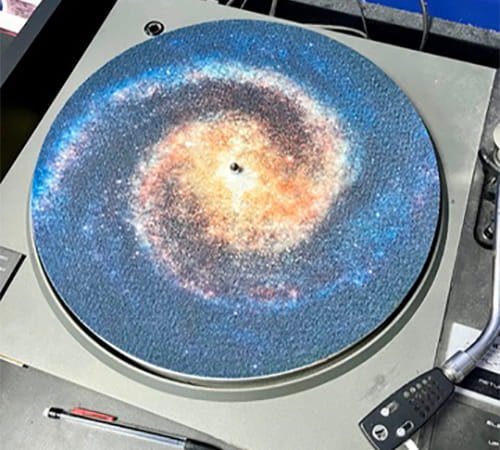
How to Install a Turntable Slipmat
Installing a turntable slipmat is VERY EASY! Slipmats just slip through the spindle hole and sit on top of the spinning platter. Adding a slipmat is as easy as putting on a record: just drop it on the spindle!
Do make sure you take off your old slipmat before you add a new slipmat. Old slipmats can be felt, rubber or cork, they just lift right off. If you stack slipmats, you risk your platen being too thick so the needle may tilt and distort how your music sounds. Also, slipmats can slide when stacked.
What Types of Slipmats Are There?
There are several common types of vinyl slipmats:
- Felt slipmats have lower friction, are lightweight and allow easy movement—ideal for DJ use.
- Cork slipmats are good for anti-static, and offer good grip and vibration dampening for listening setups.
- Rubber slipmats have heavier dampening, and provide maximum stability and isolation.
- Acrylic slipmats can usually be foud in high-end setups to balance control and sound quality.
Beyond its straightforward function, slipmats are also a visual statement. Graphic turntable slipmats let listeners personalize their setup with artwork, band imagery, or custom designs while still serving a practical role.
For many vinyl enthusiasts, the slipmat is part of the turntable’s identity.
A vinyl turntable slipmat is both a protective tool and a performance upgrade. Whether you’re spinning records at home, DJing live, or simply want your turntable to reflect your style, the right slipmat plays an important role.
Do I Need a Turntable Slipmat?
Yes, you do! The turntable slipmat protects the record from the metal (sometimes acrylic) platter below the mat. Turntables always come with slipmats by default though. Sometimes they’re rubber, sometimes they’re felt. But putting a record directly on the platter is a bad idea.
Are Slipmats the Same as Record Player Mats?
Yes. A record player mat is simply another name for a turntable slipmat, platter mat or tunrtable mat. The term “slipmat” is commonly used by DJs, “record player mat” is more common among casual vinyl listeners and beginners.
Do Slipmats Improve Sound Quality?
Slipmats may affect sound quality, depending on the material used. For example, some poorer quality slipmats can slip while the record is playing.
There’s also different materials for different needs. Like felt slipmats reduce friction and are preferred by DJs, while cork and rubber slipmats can help dampen vibration and improve isolation on certain turntable setups.
For the most part, the difference is subtle, if there is one at all.
What Thickness is best for Turntable Slipmat?
The main reason to pay attention to the thickness of your turntable slip mat is that the mat’s thickness can affect the Vertical Tracking Angle of your tonearm & needle, which comes with the possibility of distorting how the music sounds.
The best position for your turntable’s needle and arm is always perfectly level. That being said, records are not a standard thickness, and thick or thin records can also affect this.
When printing graphic turntable slipmats at Bluescentric, we always use 21oz 1/8″ (3mm) thick slipmats, which we believe is about the best all-around size. DJs often use slightly thinner slipmats for lower friction and easier scratching.
We hope we were able to help you learn a little more about vinyl turntable slipmats! Choosing the right slipmat depends on how you use your turntable, and your preference.
If you want a graphic turntable slipmat to reflect your personal style, Bluescentric has hundreds of exclusive graphic slipmat designs available and licensed band slipmats for record players! Our slipmats are made in the USA!