



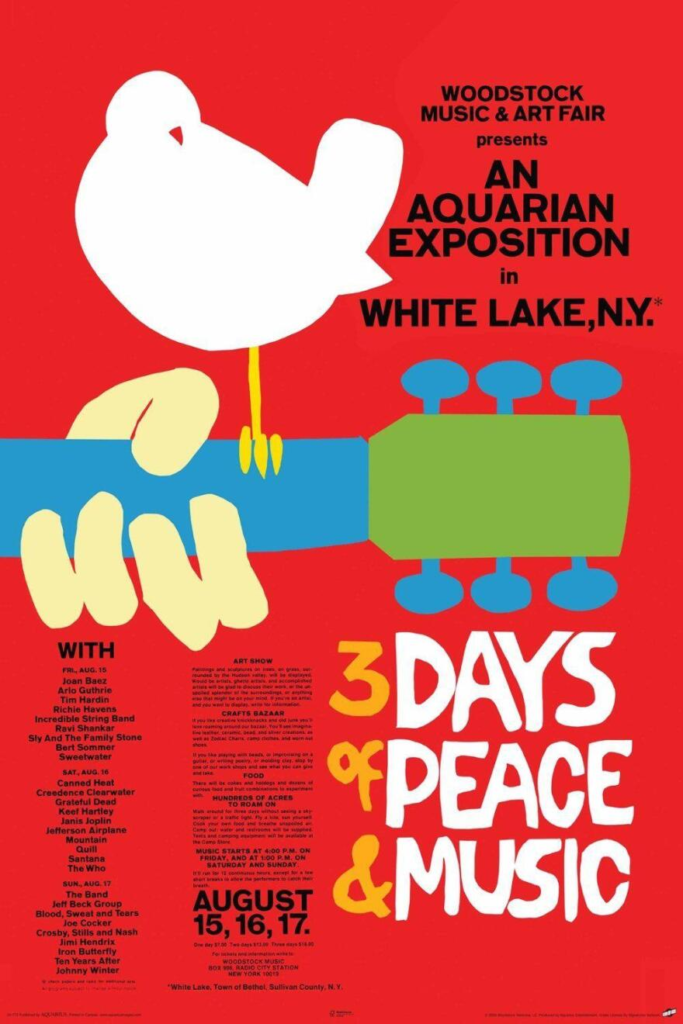
Much like the festival itself, the location of the 1969 Woodstock Music & Arts Festival was a chaotic affair whose success hinged upon luck and timing.
Here at Bluescentric, it is our great honor to design and manufacture official Woodstock Festival T-Shirts & Merch, and this is one of the most common questions we get. So this article explains the details of Woodstock Festival’s origins in Woodstock, then moving across New York from Wallkill to finally having the famed festival in Bethel.
The Woodstock Idea
Woodstock Ventures was founded by four partners, Michael Lang, Artie Kornfeld, John Roberts, and Joel Rosenman.
Bob Dylan moved to The tiny town of Woodstock, New York had exploded in popularity after Bob Dylan moved there in 1964 hoping to escape from his newfound fame, and instead brought fame with him.
The four young partners dreamed of creating a utopian recording studio retreat in Woodstock, and thought they could throw a rock concert to help fund it.
So they set about creating the Woodstock Music & Arts Fair.
Moving the Planned Festival to More Space
When they realized the tiny town couldn’t hold enough people, they sought to find space in nearby towns… which proved tricky!
There was a backlash especially from rural residents fearful of hippies and progressive ideas and rock music that made finding a venue difficult.
Finally, the festival promoters found three hundred acres in nearby Wallkill, New York, where they presented themselves as a peaceful, mild-mannered arts and crafts fair to the city.
But once the festival lineup was released that included Jimi Hendrix, CCR and others, there was no hiding the truth. It was a dreaded… “hippie rock concert“. And somehow they had already sold 50,000 tickets.
The locals were furious. The city moved quickly to cripple the festival. 30 days before the festival open, they passed a new law that forbid gatherings of over 5,000 without a permit, then immediately denied Woodstock the permit, leaving the hopeful festival homeless.
At this point, the festival had sold upwards of 100,000 tickets, and had already paid hundreds of thousands of dollars to artists & advertisers. There were millions of dollars and massive liabilities on the line for the promoters. They were desperate and cornered.
Woodstock Festival Finds Its Home
A hotel owner in Bethel, NY, west of Wallkill heard about the eviction and offered his space and festival permit, but it was much to small. So he introduced the promoters to a local dairy farmer named Max Yasgur who was sympathetic to their cause.
Yasgur owned a 600 acre majestic bowl-shaped hill of alfalfa fields in Bethel. The parties reportedly struck a $50,000 deal to use the space and Woodstock had a home again. At the very last second.
It was late July, about three weeks before the festival open date.
The crew had around-the-clock infrastructure work to do, building a massive stage, water wells, electricity, etc. In fact, while people often say festival-goers pushed down the fences, in reality the crew had to mostly abandon building fences just to get the stage and electricity in time.
In the mean time, just two days before the festival, the furious residents of Bethel, NY were suing to stop the ‘hippie festival’ and the matter landed before State Supreme Court Justice George Cobb, who allowed the festival to proceed. In the end, the Judge’s opinion was swayed by the the simple fact that thousands of kids had already showed up to Bethel to attend the festival.
Woodstock Music & Arts Festival became the defining moment of an era, and it happened through an unlikely and chaotic series of events… The perfect, majestic setting that came at the last second, a jaw-dropping lineup could never again be possible at any other time in history. It was as if Woodstock happened by destiny.
Here is the 1969 Woodstock Music & Arts Festival Lineup
Day 1: Friday, August 15 – Saturday, August 16
- Richie Havens * Time: 5:07 PM – 7:00 PM (Friday)
- Fun fact: Havens had to play an extra long set because other acts were stuck in traffic.
- Swami Satchidananda * Time: 7:10 PM – 7:20 PM (Friday)
- Gave the official invocation and opening address, not a musician
- Sweetwater * Time: 7:30 PM – 8:10 PM (Friday)
- Bert Sommer * Time: 8:20 PM – 9:00 PM (Friday)
- Tim Hardin * Time: 9:20 PM – 9:45 PM (Friday)
- Ravi Shankar * Time: 10:00 PM – 10:35 PM (Friday)
- *His set was cut short by rain
- Melanie (Melanie Safka) * Time: 10:50 PM – 11:20 PM (Friday)
- Arlo Guthrie * Time: 11:55 PM – 12:40 AM (Saturday)
- Joan Baez * Time: 12:55 AM – 2:00 AM (Saturday)
- Fun fact: she played through a major rainstorm
Day 2: Saturday, August 16 – Sunday, August 17
The festival transitioned to heavy rock, blues, and psychedelic acts, running virtually non-stop through the night.
- Quill * Time: 12:15 PM – 1:00 PM (Saturday)
- Country Joe McDonald * Time: 1:20 PM – 1:30 PM (Saturday)
- Fun fact: Joe was NOT scheduled to perform, Santana just wasn’t ready to go on yet. Joe performed again with The Fish the next day.
- Santana * Time: 2:00 PM – 2:45 PM (Saturday)
- John Sebastian * Time: 3:30 PM – 3:55 PM (Saturday)
- Fun fact! Sebastian was just at the festival as a guest, but the stage was too wet for electric instruments so they recruited him to play acoustic for a while.
- Keef Hartley Band * Time: 4:45 PM – 5:30 PM (Saturday)
- The Incredible String Band * Time: 6:00 PM – 6:30 PM (Saturday)
- Were supposed to play Friday, but got rained out
- Canned Heat * Time: 7:30 PM – 8:45 PM (Saturday)
- Mountain * Time: 9:00 PM – 10:00 PM (Saturday)
- Grateful Dead * Time: 10:30 PM – 12:05 AM (Sunday)
- Fun Fact! This was a legendarily strange show because the wet stage lead to the instruments and wires shocking the musicians. Also The Dead played a massive 36-minute version of “Turn On Your Love Light.”
- Creedence Clearwater Revival * Time: 12:30 AM – 1:20 AM (Sunday)
- Janis Joplin (with The Kozmic Blues Band) * Time: 2:00 AM – 3:00 AM (Sunday)
- Sly and the Family Stone * Time: 3:30 AM – 4:20 AM (Sunday)
- The Who * Time: 5:00 AM – 6:05 AM (Sunday)
- Jefferson Airplane * Time: 8:00 AM – 9:40 AM (Sunday)
Day 3: Sunday, August 17 – Monday, August 18
A severe Sunday afternoon thunderstorm caused a multi-hour delay, pushing the festival deep into Monday morning.
- Joe Cocker and The Grease Band * Time: 2:00 PM – 3:20 PM (Sunday)
- Fun fact! A giant thunderstorm hit immediately after his set and completely stopped the festival for hours.
- Country Joe and the Fish * Time: 6:30 PM – 8:00 PM (Sunday)
- Ten Years After * Time: 8:15 PM – 9:30 PM (Sunday)
- The Band * Time: 10:00 PM – 10:50 PM (Sunday)
- Johnny Winter * Time: 12:00 AM – 1:05 AM (Monday)
- Fun fact! This performance featured a guest appearance by his brother, Edgar Winter.
- Blood, Sweat & Tears * Time: 1:30 AM – 2:30 AM (Monday)
- Crosby, Stills, Nash & Young * Time: 3:00 AM – 4:00 AM (Monday)
- Fun fact! They open this saying, correctly, that this is only their second time ever performing together live. They played an acoustic set then an electric set.
- The Paul Butterfield Blues Band * Time: 6:00 AM – 7:00 AM (Monday)
- Sha Na Na * Time: 7:30 AM – 8:00 AM (Monday)
- Jimi Hendrix (Gypsy Sun & Rainbows) * Time: 9:00 AM – 11:10 AM (Monday)
- Fun fact! MOST of the crowd was actually gone by the time Jimi got on stage! There were somewhere around 30-40,000 festival-goers remaining by Monday morning. He closed the festival with his now absolutely legendary solo electric guitar rendition of “The Star-Spangled Banner.”
Browse the collection. Wear the legacy.
-
 Hot
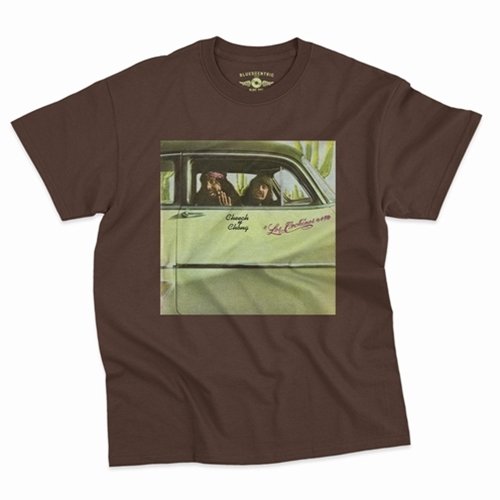
HotCheech and Chong Los Cochinos T-Shirt – Classic Heavy Cotton
Price range: $34.97 through $39.97 This product has multiple variants. The options may be chosen on the product page -
 Hot
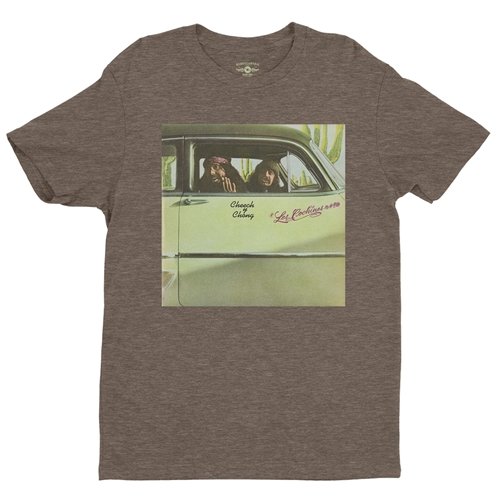
HotCheech and Chong Los Cochinos T-Shirt – Lightweight Vintage Style
Price range: $34.97 through $38.97 This product has multiple variants. The options may be chosen on the product page -
Hot
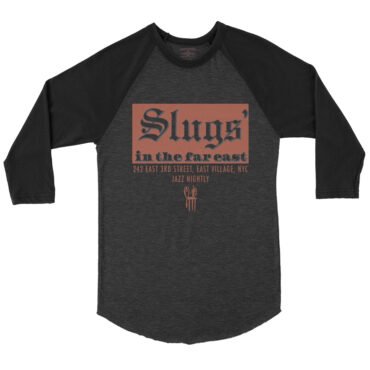
Slugs in the East Side Baseball T-Shirt
Price range: $37.97 through $39.97 This product has multiple variants. The options may be chosen on the product page -
Hot
Slugs in the East Side Crewneck Sweatshirt
Price range: $56.97 through $58.97 This product has multiple variants. The options may be chosen on the product page