


Pink Floyd – Band History, Members, Albums, Articles & Official Merch
Pink Floyd was a British rock band formed in 1965 and known for conceptual albums like The Dark Side of the Moon and The Wall. One of the most influential rock bands of all time, the group featured Syd Barrett, Roger Waters, David Gilmour, Richard Wright, and Nick Mason.
Pink Floyd blended psychedelic experimentation with philosophical lyrics, dazzling light shows and groundbreaking studio production. Their albums like Dark Side, The Wall, Wish You Were Here and Animals are still among the most celebrated of the last fifty years.
Bluescentric’s Pink Floyd hub explores the band members, discography, history, FAQs, songs, legacy, and even video of live performances. You can also find unique, officially licensed Pink Floyd t-shirts & merch inspired by their iconic eras.
Pink Floyd Baseball Tees • Pink Floyd Outerwear • Pink Floyd Long Sleeves • Pink Floyd Ringers • Pink Floyd T-Shirts • Pink Floyd Women’s T-Shirts • Big & Tall Pink Floyd Shirts • Pink Floyd Kids T-Shirts
“With Pink Floyd we’ve always been in a space where we were able to try out anything… this sort of experimenting is like working yourself towards something and trying to find what you like and what you want.”
– Pink Floyd’s Roger Waters
Frequently Asked Questions about Pink Floyd
Who Founded Pink Floyd?
What does the name Pink Floyd mean?
Pink Floyd Articles & Trivia: Learn about Pink Floyd
Discover interesting stories behind Pink Floyd’s members, album cover art, song facts and histories, and legendary behind the scenes Pink Floyd fables. These are longer-form articles about Floydian topics that deserve more than a trivia one-liner.
“Syd [Barrett] was a major inspiration for me… Pink Floyd were the only band around that were doing something truly new.”
— David Bowie
Pink Floyd Discography
The Piper at the Gates of Dawn (1967)
A Saucerful of Secrets (1968)
More (1969)
Ummagumma (1969, Live Album)
Atom Heart Mother (1970)
Meddle (1971)
Obscured by Clouds (1972)
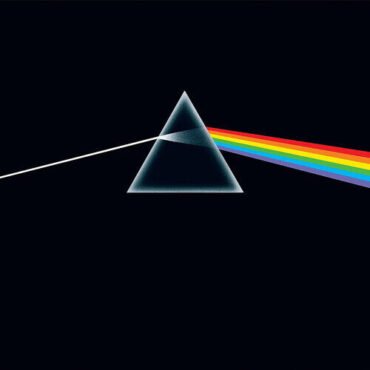
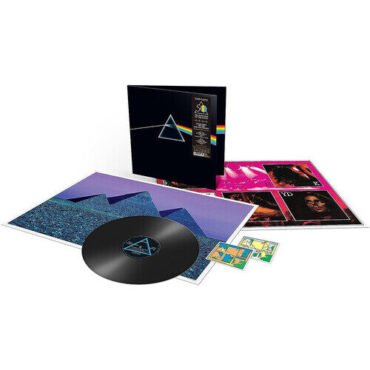
The Dark Side of the Moon (1973)
Wish You Were Here (1975)
Animals (1977)
The Wall (1979)
The Final Cut (1983)
A Momentary Lapse of Reason (1987)
Delicate Sound of Thunder (1988, Live Album)
The Division Bell (1994)
Pulse (1995, Live Album)
The Endless River (2014)
The Early Years 1965–1972 (2016, Complete Sessions)
The Later Years 1987–2019 (2019, Complete Sessions)
Pink Floyd’s Concept Albums
More than anything, Pink Floyd was famed for building an entire body of musical art around simple concepts and ideas, such as life and death in Dark Side of the Moon, or communicating with each other in The Division Bell. Below is a brief overview of Pink Floyd’s most well-known conceptual albums, and the meanings and themes behind each.
The Dark Side of the Moon (1973)
Released in 1973, The Dark Side of the Moon transformed Pink Floyd out of a cult progressive rock act into a global phenomenon. Built around themes of time, money, mortality, and mental health, the album flows as a continuous piece rather than a collection of singles. Songs like “Time,” “Money,” and “Us and Them” are structured to serve a larger narrative arc, and bleed into one another.
The band’s seamless production and studio experimentation, and the album’s tape loops and spoken-word snippets set a new standard for album-oriented rock. It remained on the Billboard charts for an unprecedented 741 consecutive weeks, and became one of the best-selling albums in history.
» The laughter, voices and spoken words in Dark Side of the Moon
Wish You Were Here (1975)
Released in 1975 on the heels of their Dark Side opus, Wish You Were Here is both a tribute and a critique. The album centers on absence, alienation, and especially the music industry. A lot of the album’s emotional weight was tied to former bandmate Syd Barrett. The nine-part suite “Shine On You Crazy Diamond” directly references Barrett’s influence and decline.
Musically, the album expands on the atmospheric feeling of Dark Side while leaning more heavily into extended compositions and synthesizer textures. It remains one of Pink Floyd’s most personal and cohesive works, and has been a fan favorite for decades. The album was a high point for the band’s creative maturity.
» Rock history: When Barrett wandered into the studio after years of absence, during recording of a song about him
Animals (1977)
Released in 1977, Animals is Pink Floyd’s most nakedly political album. It was loosely inspired by George Orwell’s Animal Farm. The record divides society into metaphorical “Dogs,” “Pigs,” and “Sheep,” to critique capitalism, corporate greed, and power structures.
Unlike the polished sheen of Dark Side, Animals features longer, heavier arrangements and a more aggressive tone. This was the period when Roger Waters’ influence over the band’s direction became dominant. Initially it was not as commercially explosive, but over time the album has become one of Pink Floyd’s most celebrated.
The Wall (1979)
Released in 1979, The Wall is a rock opera concept built around the character “Pink,” a fictional rock star who isolates himself behind a psychological barrier shaped by trauma, fame, and authoritarianism. The album explores themes of war, education, identity, and emotional detachment.
Songs such as “Another Brick in the Wall (Part 2)” and “Comfortably Numb” made The Wall one of Pink Floyd’s most commercially successful releases. The tour featured elaborate live performances, complete with a literal wall constructed on stage. It cemented the band’s reputation for the most dazzling large-scale theatrical productions.
The album was born out of frustrations Waters and the band experienced interacting with the unruly crowds on their Animals tour, where Roger wanted to “build a wall” between him and the audience. The album’s intensity and internal tensions during its creation foreshadowed the eventual departure of Roger Waters.
“I remember playing [Dark Side of the Moon] for my wife then, and I remember her bursting into tears when it was finished. And I thought, ‘This has obviously struck a chord somewhere,’ and I was kinda pleased by that.”
– Roger Waters
Featured Pink Floyd T-Shirts & Merch
-
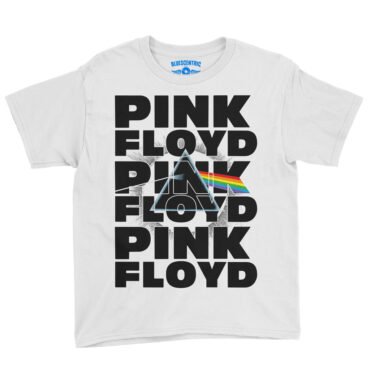
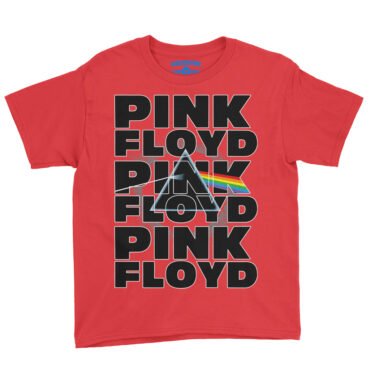
Pink Floyd Graphic Dark Side Youth T-Shirt – Lightweight Children & Toddlers
$34.95 Select options This product has multiple variants. The options may be chosen on the product pageSelect options This product has multiple variants. The options may be chosen on the product page Quick View Add to wishlist -


Pink Floyd Graphic Dark Side Hooded Pullover Jacket
$59.97 – $62.97Price range: $59.97 through $62.97 Select options This product has multiple variants. The options may be chosen on the product pageSelect options This product has multiple variants. The options may be chosen on the product page Quick View Add to wishlist -
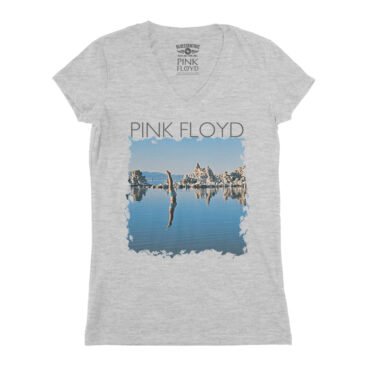
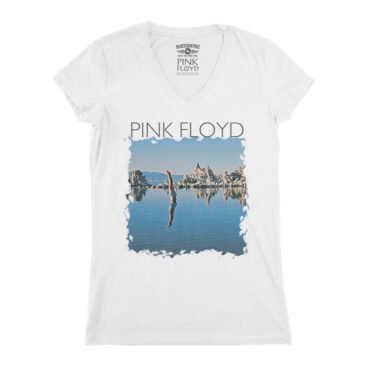
Pink Floyd WYWH Diver V-Neck T Shirt – Women’s
$36.97 – $38.97Price range: $36.97 through $38.97 Select options This product has multiple variants. The options may be chosen on the product pageSelect options This product has multiple variants. The options may be chosen on the product page Quick View Add to wishlist
Pink Floyd Members
» Learn more about the members of Pink Floyd
1965 – 1968ish, the Psychedelic era
- Barrett, Waters, Wright, Mason
- Gilmour joins in 1968
Piper at the Gates of Dawn (1967)
A Saucerful of Secrets (1968)
Ummagumma (1969)
1968-69 – 1979, the Classic era
- Waters, Gilmour, Wright, Mason
Atom Heart Mother (1970)
Meddle (1971)
Obscured by Clouds (1972)
Dark Side of the Moon (1973)
Wish You Were Here (1975)
Animals (1977)
1979 – 1985, the Waters-led era
- Waters, Gilmour, Mason
*Wright was absent for The Wall tour period
The Wall (1979)
The Final Cut (1983)
1987 – 1994, the Gilmour-led era
- Gilmour, Mason, Wright
A Momentary Lapse of Reason (1987)
The Division Bell (1994)
“the Pink Floyd does not know what people mean by psychedelic pop and are not trying to create hallucinatory effects on their audiences.”
– EMI Press Release for Pink Floyd’s debut album, The Piper At The Gates of Dawn
Pink Floyd Trivia & Quotes
Notable Pink Floyd Live Videos
Delicate Sounds of Thunder
Official high res Pink Floyd video, Delicate Sounds of Thunder 1987 and 88. Find classics like Shine On You Crazy Diamond, Time, Wish You Were Here and more.
The Live 8 Reunion
This is the band’s 2005 Live 8 reunion in London's Hyde Park. It was notable as the last time Roger Waters, David Gilmour, Nick Mason, and Richard Wright performed together live.
Pink Floyd Live at Pompeii
This Pink Floyd playing Echoes live at Pompeii i 1971, recently restored and re-released.
Vintage Record Labels
-

Pink Floyd Animals Vinyl Label Long Sleeve T-Shirt
$47.97 – $52.97Price range: $47.97 through $52.97 Select options This product has multiple variants. The options may be chosen on the product pageSelect options This product has multiple variants. The options may be chosen on the product page Quick View Add to wishlist -

Pink Floyd Animals Vinyl Label Racerback Tank – Women’s
$36.97 – $37.97Price range: $36.97 through $37.97 Select options This product has multiple variants. The options may be chosen on the product pageSelect options This product has multiple variants. The options may be chosen on the product page Quick View Add to wishlist